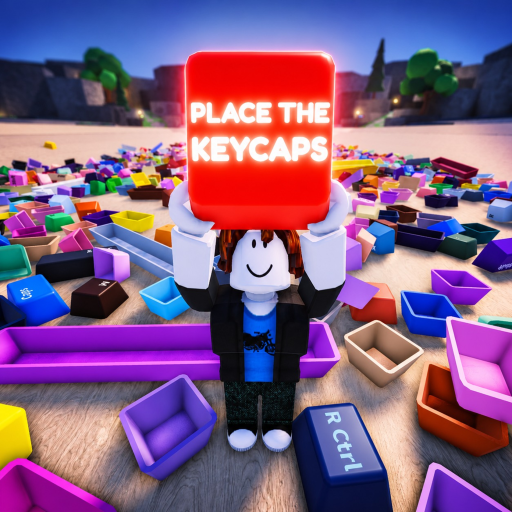
Place the Keycaps Sorting Priority
Sort high-confidence legends and distinctive sizes first, clear one board region at a time, isolate ambiguous caps, and save the final scan for the remaining empty shapes rather than chasing supposed rarity.
Sorting Priority: direct answer
Sort high-confidence legends and distinctive sizes first, clear one board region at a time, isolate ambiguous caps, and save the final scan for the remaining empty shapes rather than chasing supposed rarity.
Sources reviewed: Place the Keycaps - 1 Hour Gameplay and Place the Keycaps - Roblox and Roblox Badges API.
Sorting Priority: verified facts
| Fact | Evidence status |
|---|---|
| 58 | Verified source term |
| letters | Verified source term |
| modifiers | Verified source term |
| held tray | Verified source term |
| Sorted All Keycaps | Verified source term |
Sorting Priority: player workflow
Priority 1: unmistakable anchors
Start with readable letters and unique wide modifiers. These placements shrink the pile and establish neighboring board positions. Confirm every cap in the held tray before moving; the selection outline shows which object is active. A correct placement should fill a matching slot and advance the x/58 counter.
Priority 2: one board region
Choose a compact area such as a letter cluster or edge-modifier group and finish its obvious members. Region-based work makes gaps visible. Screenshot the area when it is stable, then move to the next region. Avoid alternating randomly between far-apart slots because late-stage diagnosis becomes a full-board search.
Priority 3: ambiguous color and size matches
Place uncertain caps in a separate ground group instead of throwing them back into the main pile. Compare legend first and width second. Color can break a tie only when the neighboring color pattern is visible; no official rarity system makes one color inherently more important.
Priority 4: milestone audit
At each ten-cap milestone, compare the counter with the number of visibly filled positions. If they diverge, inspect the last batch immediately. On desktop, remember that Q throws rather than confirms. On mobile, watch the held tray and live touch prompts.
Final five caps
Switch from pile-first to board-first. List the remaining empty shapes, then search only for those legends and widths. The Sorted All Keycaps badge is the end confirmation, not a locator. If the board shows 58/58, allow time for badge synchronization before abandoning the server or repeating completed placements.
Sorting Priority: verification checklist
- Begin with readable standard letters that establish a dense board region.
- Place distinctive wide modifiers early so large empty shapes disappear.
- Keep one region in view and finish its obvious neighbors before moving across the board.
- Move ambiguous caps aside without using Q to scatter them into the original pile.
- Check the held legend and selection outline before every trip to the board.
- Use color only after legend and physical width have narrowed the candidate positions.
- Audit the counter and board at each ten-cap milestone.
- When a batch stalls, undo the search mentally to the last recorded screenshot.
- For the final five, list empty shapes first and then search only for matching caps.
- At 58/58, wait for Sorted All Keycaps rather than repeatedly moving accepted caps.
- Keep wide and standard caps in separate unresolved groups so physical matching stays fast.
- When two slots remain plausible, fill a neighboring anchor first instead of guessing.
- Use the milestone screenshots to identify the last region where counter and board agreed.
- If the final cap appears missing, search the floor around earlier throw locations before rejoining.
- Report a reproducible missing-cap state with counter, empty shape, device, and server time.
- Do not spend the final search on alleged rare colors; search by the empty board shape and legend first.
- If a cap is under the pile, change camera height and inspect edges before scattering the remaining objects.
- Preserve the last correct counter screenshot before any late-run server rejoin.
The priority order should protect solved information. Anchors create boundaries, rows reduce ambiguity, and punctuation cleans up after the larger structure is stable. That is why a careful player can be slower early and faster near the end.
Late in the run, priority changes from fast placement to evidence preservation. The empty slot tells you what to search for, the staged pile tells you what remains uncertain, and the throw zone tells you where earlier obstructions went. Keep those three references separate.