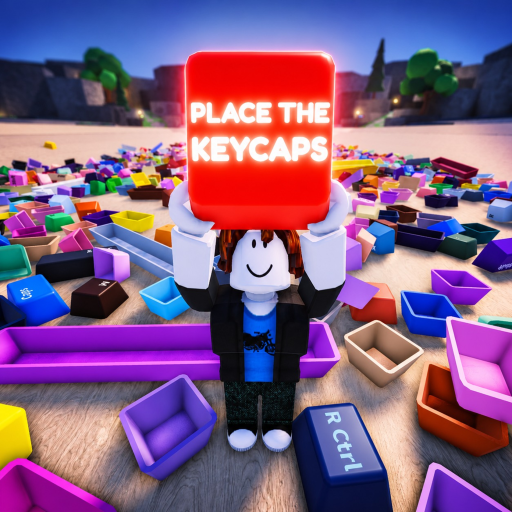
Place the Keycaps Multiplayer Workspace Guide
A multiplayer workspace guide for Place the Keycaps that helps Roblox players divide rows, avoid scattered throws, and protect final-key searches.
Treat multiplayer as shared workspace management
The official Place the Keycaps page confirms a beta Roblox sorting game where Q throws keycaps and Ctrl unlocks the mouse. The API snapshot adds the 25-player capacity and exact universe identity. Those facts mean multiplayer can help, but only if players avoid undoing each other's solved information.
When joining from the official root place, choose a role before moving many pieces. One player can handle letters, one can handle modifiers, one can search loose piles, and one can inspect empty slots. The gameplay transcript shows the experience can be confusing at first contact, so clear roles are more useful than speed.
| Role | Good responsibility |
|---|---|
| Row caller | Names the next empty keyboard slot |
| Cap runner | Brings the matching loose cap to the board |
| Pile cleaner | Uses Q only to clear obstructions |
| Counter watcher | Confirms progress after accepted placements |
| Bug reporter | Records device, server and last placement if progress fails |
Use Q with permission around solved areas
Q is a documented throw control, but multiplayer makes it risky. Before throwing near a solved row, call the cap you are moving and throw toward a known staging side. Do not throw across another player's cluster. Do not throw large anchors after they are seated unless the board clearly proves the placement is wrong.
Ctrl is the recovery control for mouse lock. If your cursor state prevents precise placement, recover input before grabbing a cap from someone else's workspace. Many multiplayer mistakes come from input panic, not from missing information.
Finish by empty slots, not by pile noise
At the end, the team should inspect the keyboard, not swarm the pile. Name every empty position, then search for those legends. If a player claims a cap is missing, check staging zones, thrown areas and nearby floor before resetting the route. The beta label on the official page means genuine bugs are possible, but a reproducible report needs the visible board state and last action.
Multiplayer FAQ
Is multiplayer required?
No. It can speed up searching, but careless movement can slow the final stage.
How many players can join?
The reviewed API lists a 25-player server capacity.
What should helpers avoid?
Avoid moving solved anchors, mixing uncertain caps with thrown clutter, and copying advice from another keycap Roblox game.
How should a bug be reported?
Report the exact place, device, server situation, last cap placed and whether Ctrl recovery was tried.
A good multiplayer session has one shared rule: solved information is expensive. Once an anchor or row is correct, protect it. Helpers should bring candidates toward the board, not pull completed pieces back into the pile. If two players disagree, compare the printed legend, width and neighboring slots before anyone throws the cap away. That keeps cooperation focused on evidence visible in the client.
Communication can be simple. Call "letters," "modifiers," "numbers," or "searching floor" rather than giving long instructions. If the counter changes, say which placement happened. If the counter does not change, do not immediately blame a player; inspect slot seating and server delay. When the run nears completion, switch from broad collection to named-slot search so everyone looks for the same missing legend.
The etiquette page should not promise rewards for teamwork. The sources prove an exact Roblox experience, beta controls and server capacity; they do not prove team bonuses, private rewards or hidden multiplayer achievements. The player value is reducing interference. In a game where Q can throw keycaps and up to 25 players can share a server, that guidance is concrete enough to save a run.
For groups, the final five caps need a different rhythm than the first fifty. Early in the run, players can gather broad clusters. Near completion, one person should call empty slots while others search named areas. If a player finds a possible match, bring it to the caller instead of placing it blindly. This avoids duplicate attempts, protects the evidence of which slot is missing, and makes the last badge check easier to explain if the beta client does not award immediately.
When two helpers want the same cap, let the board decide. The player at the board names the target slot and neighboring keys; the runner reads the loose cap legend and size. If those do not match, the cap returns to the uncertain zone instead of being forced into place.